Sharing your work
Do I need an online portfolio if I already have Instagram?
You already post your work on Instagram. People can browse your photos, follow your progress and send you a message. So what would a separate portfolio actually add?
You do not need a website just because you make art. An online portfolio becomes useful when you want someone to see a focused selection of your work, understand what you offer and find your contact details in one visit. If Instagram already does that well for your audience, you can start there. If visitors need to scroll, search or ask for basic information, a dedicated page can help.
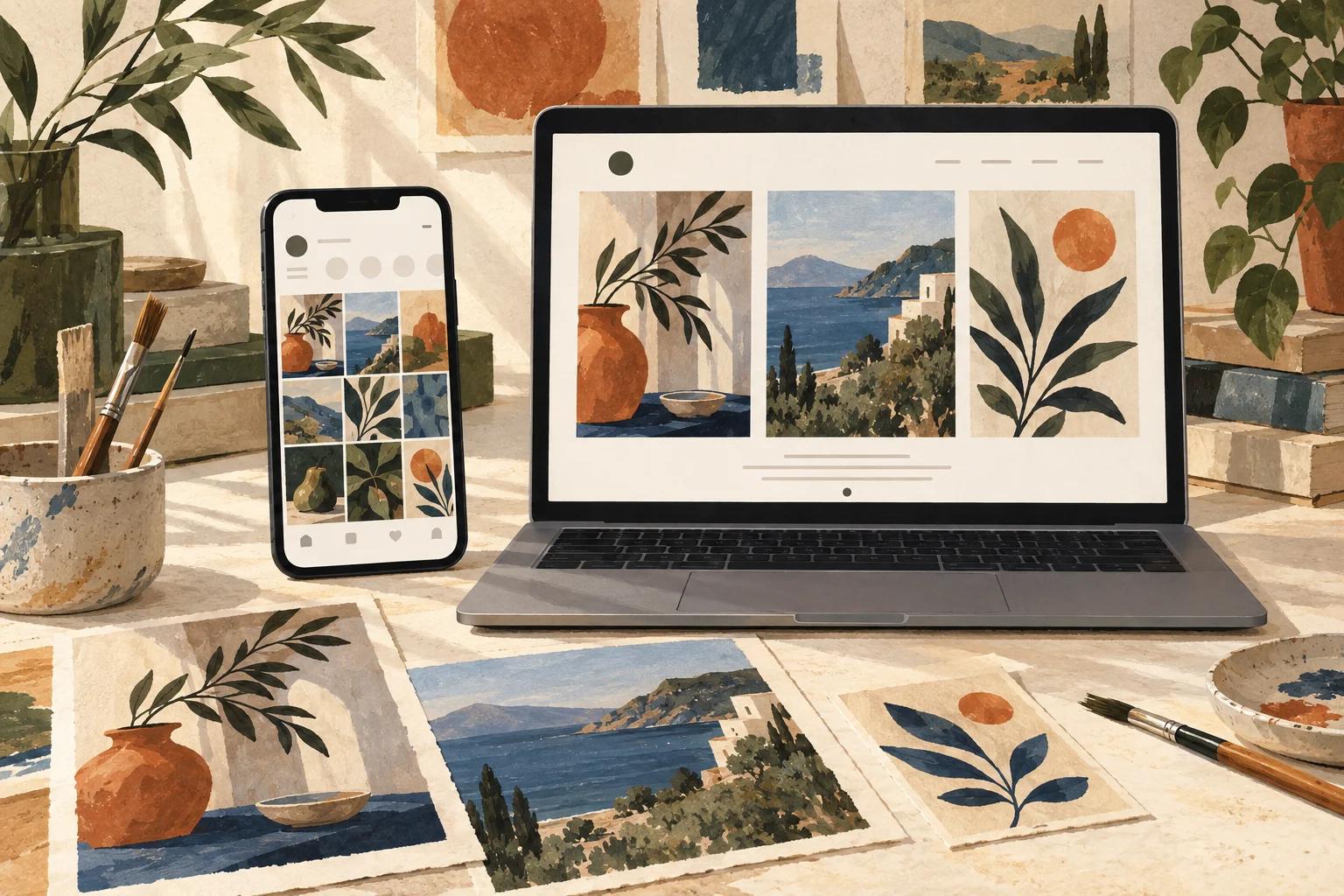
Instagram vs an online portfolio: what changes?
Instagram is useful for an ongoing conversation: a new piece, a studio moment, a work in progress or a reply to someone who follows you. A portfolio gives a visitor a selection you have edited for a particular purpose. Your most relevant work can lead, even if you made it months ago.
Think of a portrait photographer who also posts travel photos and lighting experiments. A potential portrait client may enjoy the feed, but still need to see a coherent set of portraits. A portfolio can put that selection together with a short introduction and a way to enquire.
| Visitor’s question | Online portfolio | |
|---|---|---|
| What are you making lately? | Posts, Stories and conversation can show your ongoing practice. | A selection can show the work you want to be known for now. |
| Is your work right for my project? | A focused profile can answer this; a mixed feed may take more browsing. | You can choose the images and context specifically for that decision. |
| How can I contact you? | DMs and the details you include on your profile. | The public contact details you choose to place alongside your work. |
| How will I find you? | Through sharing, recommendations, search and connections within the platform. | Through a direct link, a referral or search engines if the page is indexed. |
Instagram’s recommendations are also personalized. Meta explains that its ranking systems use predictions about what each person may find relevant. That can help people discover you, but reach is different from presentation: on your portfolio, you choose the selection a visitor sees.
When Instagram may be enough
If you are sharing a hobby, exploring your style or taking occasional enquiries from people who already know your work, an Instagram profile may meet your current needs. A separate page is less urgent when your selection is easy to browse, your description is clear and people can contact you without confusion.
There is no follower count at which a website suddenly becomes necessary. The more useful test is whether someone unfamiliar with you can answer three questions: What do you make? Is it relevant to me? How do I get in touch?
Ask a friend to browse your profile with a specific task, such as finding examples of your commissioned portraits. Notice where they hesitate. If they can find what they need, you may be ready to keep going with what you have. If they need you to send several posts and explain the gaps, you have found a practical reason for a portfolio.
Five signs you would benefit from a separate portfolio
- You keep sending the same selection of images. Put those pieces on one page, so the next enquiry starts with a useful link rather than a series of attachments.
- Your feed mixes different kinds of work. Separate the work you want to be hired for from personal updates, experiments and older projects.
- You want to reach people beyond your followers. A portfolio address is useful in an email introduction, an application, a referral or a conversation in person.
- Your work needs a little explanation. A title, medium, project description or short introduction can help someone understand what the images alone do not tell them.
- You want another way for people to reach you. Offering an email address or another contact method gives visitors a choice alongside Instagram messages.
A portfolio can support an enquiry, but it does not create demand on its own. You still need to share the link, make relevant connections and show work that fits the opportunities you want. Treat it as a useful destination for interested people.
What should you put on your online portfolio?
Start with the next decision you want a visitor to make. A painter seeking commissions, a photographer offering portrait sessions and a tattoo artist welcoming design enquiries each need a slightly different selection. You can keep the structure simple.
A focused selection of work
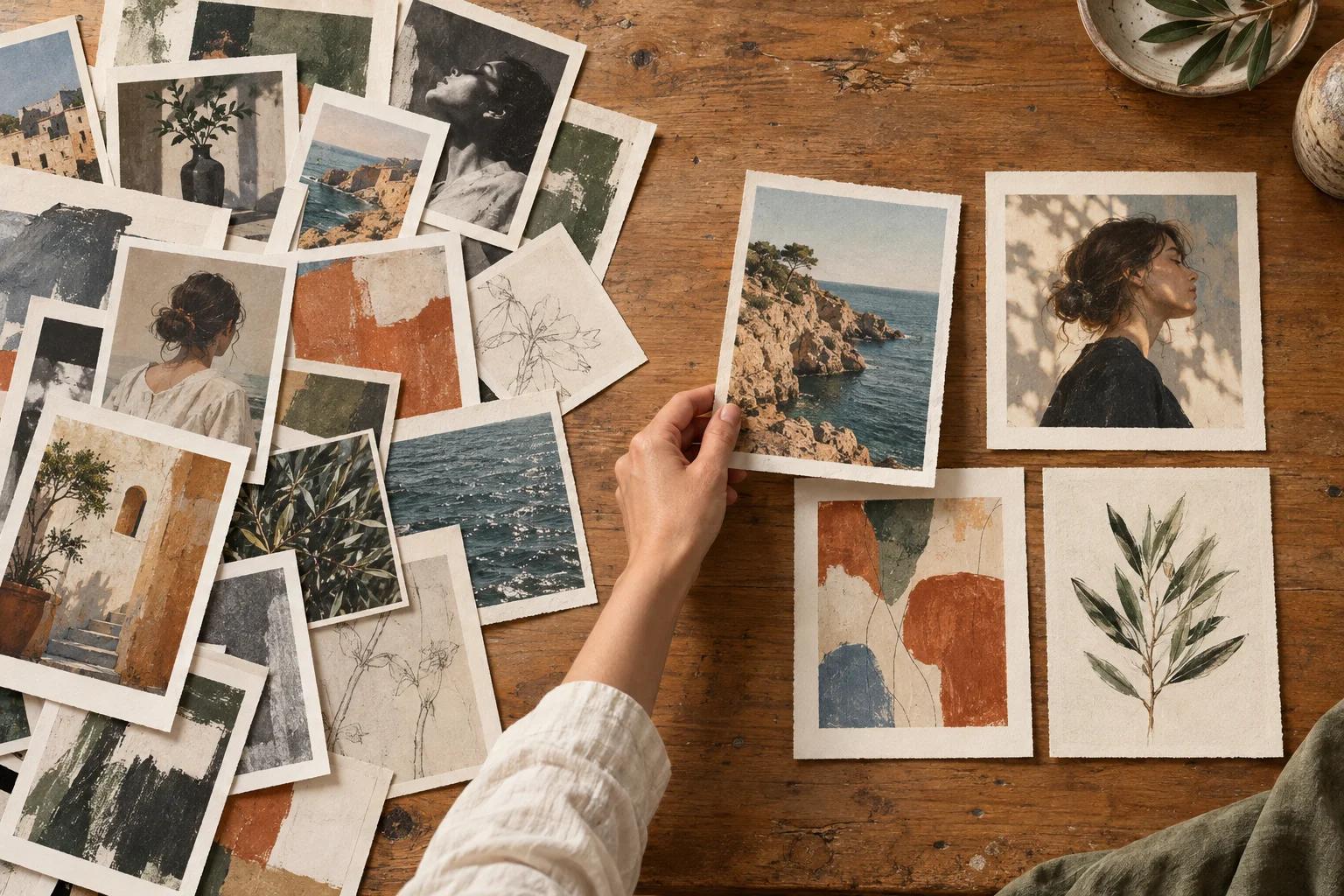
Choose images that represent the work you want to do more of. You do not need to move your entire Instagram archive. For a portrait portfolio, show enough variation to explain your approach to people, light and setting; remove near-identical frames that add little. Our guide to choosing portfolio images walks through that edit.
A short introduction and useful captions
Say what you do in words a visitor would use. “Portrait photographer working with natural light in Bristol” gives more practical context than “capturing moments that matter.” Add only details that are true of your practice. Use captions when a piece needs a title, medium or project context.
A clear next step
Tell people which enquiries you welcome and how to reach you. If you take commissions, say so. If you are sharing personal work and looking for collaborators, explain that instead. Check every contact link on your phone before sharing the page.
How to use Instagram and your portfolio together
You can keep posting where you already have a community and give interested people a clear place to explore further. This does not require two separate content schedules.
- Add your portfolio link to your Instagram profile. Give it a clear label such as “Portfolio & enquiries,” so people know what they will find.
- Share the page when it answers a real question. If someone asks about your portrait work, send the portfolio link with a brief personal reply.
- Keep your contact options connected. You can include Instagram among your portfolio’s contact details, alongside the other methods you prefer.
- Review the selection when your work changes. Update the portfolio after a relevant project or when your availability changes. It does not need a new image every time you post.
For example, a photographer might share a behind-the-scenes post from a portrait session, then direct interested visitors to a selection of finished portraits. The post starts the conversation; the portfolio helps someone decide whether to ask about a session.
Common questions about Instagram and portfolio websites
Can I use Instagram as my photography portfolio?
Yes. A focused profile can show your style and give people a way to contact you. Consider a separate portfolio when you need a more deliberate selection, a link for applications or an easier introduction for people outside your Instagram audience. Follow any format requested by a client, employer or course.
Will a portfolio website bring me more clients?
It can make your work easier to assess and your contact details easier to find. That may help interested visitors take the next step, but a website alone does not guarantee enquiries. Its value depends on the work, the audience and how people reach the page.
Can people find my portfolio on Google?
A public page can be considered for search results if search engines can access it. Clear text about your work and links to your page can help people and search engines understand it. Google makes clear that even a successfully loaded page is not guaranteed to be indexed. Publishing a portfolio does not promise a ranking for searches such as “portrait photographer.”
Do I need my own domain name?
A custom domain can be useful if you want a branded address, but you can start with a hosted portfolio link. delaFolio publishes pages at www.delafolio.com/your-name. Decide which address and features suit your needs before committing.
Deciding how to build that page? Compare a ready-made portfolio with a website builder or custom site.
Do I have to stop using Instagram?
No. If it helps you share your practice and connect with people, keep using it. A portfolio can sit alongside it and offer a focused view of the work you want visitors to remember.
Put your work together
Give interested people a place to look closer.
Try a small selection of your work, a short introduction and the contact details you want to share. Preview the page, then decide whether it adds something useful to your Instagram presence.
Create your free draft